
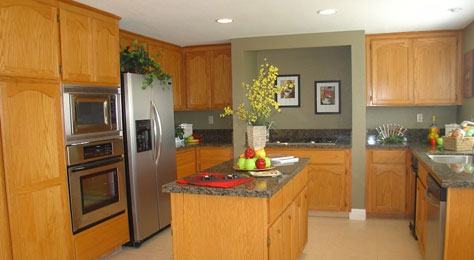
The Ultimate Easy Guide To Prepare Your Home For Sale

The Ultimate Easy Guide To Prepare Your Home For Sale If you have made the decision to sell your home and lets face it there are lot of people in that very More »

Keep Your Residence Safe From Electrical Threats

Keep Your Home Safe From Electric Threats Your residence is a risk-free place from the globe, a location to kick back as well as loosen up with household as well as close More »

Soundproofing Apartment Walls: A DIY Guide for Peace and Quiet Living in an apartment often means sharing walls with neighbors, and with that can come unwanted noise—loud music, conversations, television, or even footsteps

While you can’t control your neighbors’ activities, you can take control of your own environment. Soundproofing your apartment walls is a highly effective DIY project that can dramatically increase your peace, privacy, and quality of life. Before you begin, always check your lease agreement and consult with your landlord to ensure any modifications are permitted.

Understanding the Basics:

Soundproofing vs. Sound Absorption

First, it’s crucial to distinguish between two key concepts:
* Soundproofing (Blocking): This prevents sound from traveling through a wall. It involves adding mass, creating air gaps, and decoupling structures.
* Sound Absorption (Dampening): This improves the acoustics *within* a room by reducing echo and reverberation (e.g., with acoustic panels).

For stopping neighbor noise, you need to focus on soundproofing.

The Most Effective DIY Apartment Wall Soundproofing Methods

Here are practical, renter-friendly to moderate-commitment solutions, listed from simplest to most involved.

1. The Non-Invasive & Renter-Friendly Approach

These solutions are perfect if you cannot make permanent changes.

* Seal the Gaps: Sound leaks through even the smallest cracks. Use acoustic sealant or weatherstripping tape to seal gaps around electrical outlets, baseboards, and where the wall meets the ceiling and floor. (Tip: Turn off power at the breaker before working on outlets).
* Add Mass with Furniture and Decor: Place large, heavy bookcases, wardrobes, or padded headboards against the shared wall. Hang thick, heavy tapestries or specially designed soundproofing blankets. Layered rugs on the floor can also help dampen impact noise.
* Use Acoustic Panels: While primarily for absorption, dense, mass-loaded acoustic panels mounted on the wall can provide a minor blocking benefit and significantly improve in-room acoustics.

2. The Intermediate Commitment: Adding New Layers

These methods offer a significant upgrade and are often reversible.

* Mass Loaded Vinyl (MLV): This is a thin, flexible, and incredibly dense sheeting that is a superstar for DIY soundproofing. You can hang it directly on the wall (like heavy wallpaper) and then cover it with a new layer of drywall or decorative fabric. It adds crucial mass without taking up much space.
* Soundproof Drywall/Quiet Rock: For a more permanent but highly effective solution, you can add a second layer of drywall over the existing wall. Using special soundproof drywall (which has a dampening core) or applying Green Glue noiseproofing compound between two layers of standard drywall can dramatically improve Sound Transmission Class (STC) ratings. This requires drywall finishing skills.

3. The Advanced (But Most Effective) Method: Building a New Wall

For the ultimate sound barrier, you can build a new, decoupled wall in front of the existing one.
1. Frame a new wall with metal or wood studs, leaving a small air gap between it and the existing wall.
2. Fill the cavities with soundproof insulation like mineral wool (Rockwool).
3. Attach MLV to the studs.
4. Install two layers of drywall with Green Glue in between.
This method addresses all soundproofing principles: decoupling, mass, absorption, and damping. It is a major project that reduces room space and requires advanced DIY skills or a professional.

Step-by-Step:

A Popular DIY Hybrid Approach

A highly effective and manageable project combines MLV and new drywall:

  • 1. Prepare the Wall::
  • Remove outlet covers, trim, and any wall fixtures. Locate and mark studs.

  • 2. Apply Mass Loaded Vinyl::
  • Staple or adhesive-mount MLV sheets directly to the existing wall, overlapping seams by a few inches. Seal seams with acoustic sealant.

  • 3. Furring Strips::
  • Install thin wooden furring strips over the MLV into the wall studs. This creates a shallow cavity.

  • 4. Add Drywall::
  • Screw a new layer of 5/8″ drywall directly to the furring strips. For better results, use two thinner layers with Green Glue between them.

  • 5. Finish::
  • Tape, mud, and sand the drywall seams. Reinstall trim and outlet extenders, then paint.

    What Won’t Work (Common Myths)

    * Egg Cartons: These are a myth. They are flimsy and only slightly absorb high-frequency sounds within the room; they do *nothing* to block sound transmission.
    * Regular Insulation Alone: Pink fiberglass batt insulation is for thermal, not acoustic, purposes. While better than nothing, specialized acoustic insulation (mineral wool) is far superior for sound.
    * Thin Foam Panels: The foam squares sold for “soundproofing” are purely for absorption and will not stop noise from neighbors.

    Final Tips for Success

    * Identify the Noise: Is it airborne (voices, TV) or impact (footsteps, thumps)? Solutions like MLV and extra drywall are best for airborne, while decoupling and specialized underlayments help with impact.
    * Don’t Forget Floors and Ceilings: Sound travels in all directions. Consider area rugs with thick pads and, if possible, addressing ceiling noise with similar principles.
    * Patience is Key: Soundproofing is about incremental gains. Combining several methods will yield the best results.

    By strategically applying these DIY techniques, you can transform your noisy apartment into a serene sanctuary. Start with the simple seals and decor, and work your way up to more involved projects for the quiet home you deserve.

    Pool Table Leveling After Assembly: A Comprehensive Guide A perfectly level playing surface is the single most important factor in ensuring accurate gameplay on a pool table

    Even a slight incline can cause balls to roll off course, turning a game of skill into one of chance. After the complex process of assembling your slate-bed table, proper leveling is the final, critical step to transform it from furniture into a precision instrument. This guide will walk you through the professional methods for achieving a perfectly level playing field.

    Why Leveling is Non-Negotiable

    Before diving into the *how*, understand the *why*. An unlevel table causes several issues:
    * Ball Roll-Off: The most obvious problem. Balls will consistently drift toward the low point of the table.
    * Inconsistent Bank Shots: The angles of your banks and kicks will be unpredictable.
    * Speed Distortion: A downhill shot will play faster, while an uphill shot will play slower, disrupting your feel for the game.
    * Professional Standards: For tournament or serious recreational play, a level table is the foundation of fair competition.

    Tools You Will Need

    Gather these tools before you begin:

  • 1. A High-Quality Machinist’s Level::
  • This is your most important tool. A 24-inch or 48-inch level is ideal. A small carpenter’s level is insufficient for this task.

  • 2. Shims::
  • Professional installers use metal or durable plastic shims. For DIY, brass or stainless steel shims are excellent. In a pinch, high-density plastic or even old playing cards can be used temporarily, but they may compress over time.

  • 3. Wrench or Socket Set::
  • To adjust the leg levelers (if your table has them).

  • 4. Notepad and Pen::
  • To record your measurements.

  • 5. Assistant::
  • Leveling is much easier with a second person.

    The Step-by-Step Leveling Process

    Step 1: Initial Placement and Stability
    Ensure your table is in its permanent location. The floor itself must be as level and solid as possible. On carpet, use a plywood base under each leg for stability. Check that all frame bolts are tightened securely and the slate seams are filled and smooth.

    Step 2: Establish Your Baseline
    Place your long level along the center of the table, running from the foot spot to the head spot (the long way). Note the bubble’s position. Mark the “low” end. Now, place the level across the table at the foot spot, center spot, and head spot (the short way). You are creating a mental map of the table’s topography.

    Step 3: The “Star Pattern” Method (For Tables with Leg Levelers)
    Most modern tables have adjustable leg levelers. The goal is to raise the low corners/sides without twisting the frame.
    1. Identify the lowest corner.
    2. Place your level on a diagonal from that low corner to the opposite high corner. Adjust the leg leveler at the low corner until the bubble is centered *along that diagonal only*.
    3. Move your level to the other diagonal (forming an “X”). Check the reading.
    4. Now check the long center and short center lines again.
    5. Repeat this process—checking diagonals, then lengths, then widths—making tiny adjustments. Raising one corner will affect the others. Patience is key. This is an iterative process.

    Step 4: Shim Method (For Tables without Levelers)
    If your table has fixed legs, you must shim from the bottom.
    1. Identify the low leg(s) using your level.
    2. With an assistant’s help, slightly lift the leg and slide one or more shims underneath. The shim should be placed to fully support the leg’s foot.
    3. Lower the leg and re-check with your level.
    4. Continue shimming incrementally, re-checking after each adjustment, until level is achieved across all axes.

    Step 5: The Final Check – The Roll Test
    After your level indicates perfection, perform the ultimate test: the roll test.
    1. Place a ball on the *foot spot* (where the second rack ball sits).
    2. Give it a gentle, smooth push toward the center of the head rail, with no English.
    3. The ball should roll in a straight line, hit the head rail, and return directly back to your cue tip (or very close to it).
    4. Repeat this test from the *head spot* to the foot rail, and from *side spots* to the opposite side rail.
    5. If the ball veers consistently in one direction, minute adjustments are still needed.

    Pro Tips and Common Pitfalls

    * Slate Seams: Your level must bridge the slate seams. A seam that is not perfectly flush can throw off your reading.
    * Cloth Stretch: New cloth can have slight wrinkles or tension variations. The roll test is more reliable than the level alone on a freshly clothed table.
    * Temperature & Humidity: Wood and slate can shift slightly with environmental changes. It’s good practice to check your table’s level seasonally.
    * Don’t Chase Perfection: The goal is a perfectly level *playing surface*, not necessarily a level *frame*. Sometimes the frame may be slightly off, but if the slate plays true, your job is done.

    Conclusion

    Leveling your pool table after assembly is a meticulous but deeply rewarding process. It requires patience, precision, and the right tools. By methodically following these steps—using a quality level, adjusting incrementally, and trusting the final roll test—you will create a table that performs predictably and professionally. The satisfying *thwack* of a perfectly executed shot on a perfectly level table is the ultimate reward for your careful work. Now, rack ’em up and enjoy a true test of skill.

    Support us!

    If you like this site please subscribe