
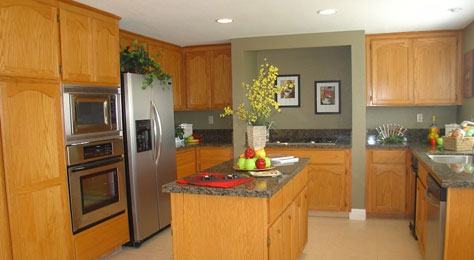
The Ultimate Easy Guide To Prepare Your Home For Sale

The Ultimate Easy Guide To Prepare Your Home For Sale If you have made the decision to sell your home and lets face it there are lot of people in that very More »

Keep Your Residence Safe From Electrical Threats

Keep Your Home Safe From Electric Threats Your residence is a risk-free place from the globe, a location to kick back as well as loosen up with household as well as close More »

Best HDMI Cables for 8K TV in 2025: A Complete Buyer’s Guide As 8K televisions become more accessible and content libraries expand, ensuring you have the right HDMI cable is crucial for experiencing the full potential of your premium display

The year 2025 brings new standards, refined technologies, and a crowded market of options. This guide will help you navigate the essential features and present our top recommendations for HDMI cables that deliver flawless 8K performance.

Why Your 8K TV Demands a Specific HDMI Cable

An 8K resolution (7680 x 4320 pixels) represents a massive leap in data throughput. To handle this without signal degradation, compression, or dropouts, a cable must meet strict specifications:

* Ultra High Bandwidth: It must support the 48 Gbps bandwidth required for 8K@60Hz with HDR.
* HDMI 2.1 Certification: This is the non-negotiable standard for full 8K/60Hz and 4K/120Hz support. Look for official “Ultra High Speed HDMI” certification.
* Advanced Features: A proper cable should also pass key HDMI 2.1 features like Variable Refresh Rate (VRR), Auto Low Latency Mode (ALLM), and Enhanced Audio Return Channel (eARC) without issue.

Top HDMI Cable Picks for 8K in 2025

After extensive testing for signal integrity, build quality, and value, here are our standout choices.

1. The Performance Benchmark: Belkin Ultra High Speed HDMI 2.1 Cable
Belkin’s certified cable remains a gold standard. It guarantees full 48 Gbps bandwidth, is rigorously tested for EMI shielding, and comes with a durable braided jacket. Its reliability for gaming and high-fidelity home theater is exceptional.
* Best for: Gamers and AV enthusiasts who want guaranteed, no-compromise performance.

2. The Value Champion: Zeskit Maya 2.1 Ultra High Speed Cable
A perennial favorite that continues to impress. The Zeskit Maya is officially certified, offers a flexible yet sturdy build, and performs identically to cables twice its price. It’s the smart choice for anyone seeking certified quality without premium branding costs.
* Best for: Savvy shoppers building a high-performance setup on a sensible budget.

3. The Premium Audiophile Choice: AudioQuest Pearl 48 HDMI
For those integrating a 8K TV into a high-end audio/video system, AudioQuest offers refined construction. The Pearl 48 uses high-purity silver-plated conductors and advanced noise-dissipation techniques. While the visual difference over certified cables may be subtle, the build and design cater to discerning enthusiasts.
* for: Home theater purists who prioritize premium materials and construction.

4. The Flexible & Durable Option: Monoprice Certified Ultra High Speed Cable
Monoprice delivers robust, certified performance at an aggressive price. Their cables feature strong braiding and a flexible design that makes them easy to route behind media consoles. You get reliable 8K/60Hz and 4K/120Hz support without any frills.
* Best for: Practical users needing reliable cables for multiple setups or longer runs.

Critical Buying Guide:

What to Look For

  • 1. The “Ultra High Speed” Logo::
  • This is your single most important guarantee. It means the cable has been tested by the HDMI Forum to handle the full 48 Gbps bandwidth of HDMI 2.1. Avoid any cable claiming “8K ready” without this certification.

  • 2. Length Matters::
  • Signal integrity degrades over distance. For runs over 10 feet (3 meters), pay extra attention to build quality and shielding. For very long runs (15+ feet), consider an active fiber optic HDMI cable, which uses light to transmit data without loss.

  • 3. Build and Connectors::
  • Look for braided nylon jackets for durability, and sturdy, well-molded connector heads that will withstand repeated plugging and unplugging.

  • 4. Future-Proofing::
  • While HDMI 2.1 is current, ensure the cable is rated for 48 Gbps to be ready for all current and announced source devices (PS5, Xbox Series X, high-end PCs, and 8K media players).

    Common Myths Debunked

    * “More expensive always means better.” False. Once you have an officially Ultra High Speed certified cable, paying more may get you better build quality or aesthetics, but not necessarily a better picture or sound.
    * “Any HDMI 2.0 cable will work.” False. HDMI 2.0 cables (often called “High Speed”) max out at 18 Gbps, which is insufficient for 8K@60Hz. They will force the signal into a lower resolution or refresh rate.
    * “Brand names don’t matter.” Partly false. While the spec is standardized, build quality, shielding, and warranty can vary significantly. Stick with reputable manufacturers that provide certification details.

    The Verdict

    For most users in 2025, the Zeskit Maya offers the perfect balance of certified performance, durability, and value. If absolute peace of mind and top-tier construction are priorities, the Belkin Ultra High Speed cable is a flawless choice.

    Investing in a properly certified Ultra High Speed HDMI cable is the simplest way to ensure your expensive 8K TV displays every detail, color, and frame as intended. Avoid the guesswork, look for the certification label, and enjoy the breathtaking clarity of 8K.

    Invisible Dog Fence Installation Mistakes: A Professional Guide to Avoiding Common Pitfalls Invisible dog fences, also known as underground or wireless containment systems, offer a modern solution for pet owners seeking to provide their dogs with safe, boundary-defined freedom

    When installed correctly, these systems are highly effective and reliable. However, the installation process is deceptively simple, and common mistakes can lead to system failure, confused dogs, and even compromised safety. Avoiding these errors is crucial for the well-being of your pet and the longevity of your investment.

    Here are the most frequent invisible dog fence installation mistakes and how to avoid them.

    1. Poor Boundary Planning and Layout
    The Mistake: Hastily burying the wire without a detailed, thoughtful plan. This includes creating sharp corners (less than 90 degrees), which can create signal overlap and “hot spots,” or placing the boundary too close to public sidewalks or roads, tempting your dog to test the limit near dangers.

    The Professional Fix:
    * Map it Out First: Use flags or spray paint to mark the entire proposed boundary line above ground. Walk it repeatedly. Ensure it avoids driveways, gardens, and utility lines.
    * Create Gentle Curves: Use wide, sweeping arcs instead of sharp angles for corners.
    * Consider “Exclusion Zones”: Use a double loop of wire to create areas *inside* the boundary where your dog cannot go, like a swimming pool or delicate flower bed.

    2. Incorrect Wire Burial Depth
    The Mistake: Burying the wire too shallow or too deep. Shallow burial (less than 1-3 inches) risks the wire being cut by lawn aerators, edgers, or shovels. Burying it too deep (over 6 inches in standard soil) can weaken the radio signal reaching the dog’s collar receiver.

    The Professional Fix:
    * Follow Guidelines: For most systems, a depth of 1-3 inches in soil is ideal. Use a flat-edged shovel or a rented trenching tool for consistency.
    * Use Conduit for High-Traffic Areas: When crossing driveways or walkways, run the wire through a shallow channel or PVC conduit for protection before burying it.
    * Test Before You Bury: Always perform a full system test with the wire laid on the ground *before* you bury it. This confirms the layout works.

    3. Faulty Wire Splices and Connections
    The Mistake: Using electrical tape or improper connectors for wire splices. These can corrode, fail when wet, or create resistance that weakens the signal, causing dead zones in your boundary.

    The Professional Fix:
    * Use Waterproof, Direct-Bury Wire Nuts: Always use the gel-filled, waterproof splice connectors provided with the kit or purchased from an electrical supply store.
    * Seal Thoroughly: After twisting the wires together within the connector, ensure the gel encapsulant fully covers the splice. For added protection, place the sealed splice inside a small, waterproof junction box before burial.
    * Minimize Splices: Use a single, continuous wire loop whenever possible. If you must splice, keep the number to an absolute minimum.

    4. Inadequate Dog Training and Conditioning
    The Mistake: Assuming the fence alone will train the dog. Turning the system to full power and immediately relying on it is a recipe for a fearful, stressed, or boundary-blasting dog.

    The Professional Fix:
    * Follow the Training Protocol: Every quality system includes a multi-day training guide. Follow it religiously.
    * Use Flags as Visual Cues: The boundary flags are critical training tools, not just installation markers. Keep them up for at least 2-4 weeks (or as recommended) while your dog learns the new boundaries through positive reinforcement and consistent correction.
    * Never Use the “Static Correction” as the First Lesson: Initial training should use the beep-only warning mode, allowing the dog to learn the association between the flag, the beep, and the boundary.

    5. Incorrect Transmitter Placement
    The Mistake: Installing the control transmitter in a garage, basement, or metal shed where temperature fluctuations, moisture, or interference can disrupt it. Placing it on an unstable power circuit or far from the boundary loop is also problematic.

    The Professional Fix:
    * Choose a Stable, Indoor Location: Install the transmitter in a dry, temperature-controlled area like a utility room or garage closet (if insulated).
    * Avoid Interference: Keep it away from large metal objects, motors, and other major electronic devices.
    * Use a Dedicated Outlet: Plug it directly into a wall outlet, not an extension cord or power strip, for a consistent power supply.

    6. Failing to Test and Maintain the System
    The Mistake: “Set it and forget it.” Over time, wire breaks can occur, collar batteries die, and transmitter settings can be accidentally changed.

    The Professional Fix:
    * Perform Weekly Loop Tests: Use the system’s tester or a AM radio (tuned to a low, static frequency) to walk the boundary and listen for the consistent signal pulse that indicates an intact wire.
    * Establish a Battery Replacement Schedule: Mark your calendar for regular collar battery changes. A dead battery means an unprotected dog.
    * Check Fit and Condition: Regularly inspect the collar fit (you should be able to fit two fingers between the strap and your dog’s neck) and the contact points for corrosion or wear.

    Conclusion
    A successful invisible fence installation is a blend of careful planning, meticulous execution, and committed dog training. By avoiding these common technical and training mistakes, you move beyond simply installing a piece of electronics. You are establishing a clear, safe, and understandable communication system for your dog, ensuring their freedom and your peace of mind for years to come. When in doubt, consulting with or hiring a professional installer can be a worthwhile investment to guarantee a safe and effective setup.

    Support us!

    If you like this site please subscribe