
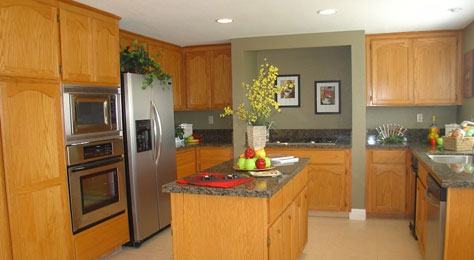
The Ultimate Easy Guide To Prepare Your Home For Sale

The Ultimate Easy Guide To Prepare Your Home For Sale If you have made the decision to sell your home and lets face it there are lot of people in that very More »

Keep Your Residence Safe From Electrical Threats

Keep Your Home Safe From Electric Threats Your residence is a risk-free place from the globe, a location to kick back as well as loosen up with household as well as close More »

The Ultimate Guide to the Best Vacuum Cleaners for Pet Hair in 2025 For pet owners, a reliable vacuum cleaner isn’t just a cleaning appliance—it’s an essential tool for maintaining a fresh, hair-free, and allergen-controlled home

As we move into 2025, vacuum technology has made significant leaps, offering smarter, more powerful, and more specialized solutions for tackling pet hair, dander, and the inevitable tracked-in debris. Whether you share your home with a single cat or a pack of heavy-shedding dogs, choosing the right vacuum can transform your cleaning routine. This guide breaks down the top contenders and key features to consider for 2025.

The 2025 Front-Runners:

Top Vacuums for Pet Owners

Based on performance, innovation, and user feedback, here are the standout models for the coming year.

1. Best Overall & Most Powerful: Dyson Gen5detect™ Absolute
Dyson continues to push boundaries with its latest iteration. The Gen5detect boasts the company’s most powerful motor to date, generating 280 Air Watts of suction. Its laser dust detection illuminates hidden pet hair on hard floors, while the fully sealed HEPA filtration system traps 99.99% of particles as small as 0.1 microns, making it a champion for allergy sufferers. The tangle-free turbine tool is a game-changer for long-haired pet owners, actively preventing hair from wrapping around the brush roll.

Ideal for: Those who want cutting-edge technology, maximum suction, and a solution for all floor types.

2. Best Value & Bagged Canister: Miele Complete C3 Cat & Dog PowerLine
A perennial favorite, the Miele C3 series earns its 2025 spot through unwavering reliability and exceptional filtration. This bagged canister vacuum features an integrated pet hair power tool with an electric brush. Its AirClean Sealed System with a HEPA filter ensures allergens are locked away. While it requires bag purchases, this contributes to its superior hygiene and consistent suction power. It’s remarkably quiet and built to last for decades.

Ideal for: Homeowners seeking durable, hygienic, and incredibly effective whole-home cleaning with a canister format.

3. Best Cordless Stick Vacuum: LG CordZero A9 Kompressor™ Pet
LG’s CordZero series challenges Dyson’s cordless dominance with unparalleled convenience features. The 2025 Pet model includes a “Kompressor” lever that compresses dirt and hair in the bin, doubling capacity and reducing how often you need to empty it—a major perk for multi-pet households. It comes with two swappable batteries for extended runtime and a convenient charging station that stores all attachments.

Ideal for: Those who prioritize cordless convenience, minimal maintenance, and quick daily clean-ups.

4. Best Robot Vacuum: Roborock S8 Pro Ultra
For hands-off daily maintenance, the Roborock S8 Pro Ultra is the 2025 pinnacle. Its dual rubber brushes are highly resistant to hair tangles. The real magic is in the all-in-one docking station that not only empties the dustbin but also refills the water tank, washes the mop pad with hot water, and dries it, making it a true “set and forget” solution for combined vacuuming and mopping.

Ideal for: Busy pet owners who want daily automated floor cleaning with minimal intervention.

5. Best for Deep Carpet Cleaning: SEBO Felix 1 Premium Pet
For homes with wall-to-wall carpeting, the SEBO Felix is a powerhouse. Its commercial-grade build quality and brilliant Parquet brush attachment (which easily switches from the primary carpet head) make it versatile. The ET-1 Powerhead features an automatic height adjustment and a brush roll that’s easily removable for cutting away any wrapped hair. Its filtration is also top-tier.

Ideal for: Homes with significant carpeting where deep, thorough cleaning is the top priority.

Key Features to Look for in 2025

When shopping for a pet hair vacuum this year, prioritize these technologies:

* Tangle-Free Brush Rolls: Look for designs with anti-tangle combs, rubberized strips, or easily removable brush rolls for cleaning.
* Sealed HEPA Filtration: This is non-negotiable for trapping pet dander and allergens inside the vacuum, not recirculating them into the air.
* Specialized Pet Tools: Motorized mini turbo brushes or upholstery tools with stiff bristles are essential for furniture, stairs, and car interiors.
* Suction Power & Runtime (Cordless): For cordless models, seek high torque for carpets and a battery system that can handle your home’s square footage.
* Ease of Emptying & Hygiene: Cyclone-based bins should be easy to empty without creating dust clouds. Bagged models offer the cleanest disposal.

The Verdict

The “best” vacuum depends on your specific needs. For a do-it-all cordless powerhouse, the Dyson Gen5detect is unmatched. For whole-home, allergen-sealing performance in a corded model, the Miele C3 is a timeless investment. For ultimate daily convenience, the Roborock robot or the LG CordZero stick vacuum will revolutionize your routine.

In 2025, the good news is that no matter your budget or home layout, there is a high-performance vacuum designed specifically to win the battle against pet hair, leaving you more time to enjoy life with your furry friends.

Projector Screen Mounting on Textured Walls: A Professional Guide Mounting a projector screen is a critical step in creating a high-quality home theater or professional presentation environment

While the process is generally straightforward on smooth, drywall surfaces, textured walls—such as those with orange peel, knockdown, or popcorn finishes—present unique challenges. This guide provides a professional approach to ensuring a secure, level, and aesthetically pleasing installation on textured walls.

Understanding the Challenge

Textured walls are designed for visual appeal and to hide minor imperfections, but their uneven surface can compromise the integrity of a mount. The primary issues include:

  • 1. Poor Surface Contact::
  • The mount’s base plate may only contact the high points of the texture, creating instability.

  • 2. Difficulty in Achieving Level::
  • The irregular surface can cause the mount to tilt during installation.

  • 3. Risk of Damage::
  • Applying pressure to secure the mount can crack or crush the textured material.

    Pre-Installation:

    Planning and Preparation

    1. Select the Right Screen and Mount:
    Choose a mounting system compatible with your screen’s weight and size. For heavier screens, a stud-mounted solution is non-negotiable. Consider low-profile mounts or ceiling mounts as alternatives if wall texture is severe.

    2. Gather the Correct Tools and Materials:
    * Stud finder (a magnetic finder is often more reliable on textured walls)
    * Level (a 4-foot level is ideal)
    * Drill with assorted bits
    * Pencil and painter’s tape
    * Key for Textured Walls: Shim material (small, flat plastic or composite shims) or large, flat washers.
    * Appropriate fasteners (lag bolts for studs, heavy-duty toggle bolts for hollow walls if studs are unavailable).

    3. Locate Studs:
    This is the most crucial step for security. Use your stud finder carefully. Mark the suspected stud edges with pencil, then confirm by drilling a small, discreet pilot hole. The ideal scenario is to anchor the main mounting brackets directly into wall studs.

    The Installation Process:

    Step-by-Step

    Step 1: Flatten the Mounting Area
    This is the professional secret for textured walls.
    * Hold the mount’s base plate against the wall in the desired location.
    * Trace its outline with a pencil.
    * Using a sharp utility knife or a flat scraper, carefully scrape away the texture inside the traced area until you reach a flat, level surface of the underlying drywall. Be careful not to cut into the drywall paper facing.
    * The goal is to create a smooth, flush pad for the mount to sit on.

    Step 2: Dry-Fit and Mark Drill Points
    * Place the mount back onto the newly flattened area.
    * Use your level to ensure it is perfectly horizontal. Adjust as necessary.
    * Once level, mark the drill holes for the fasteners through the bracket holes.

    Step 3: Drill and Fasten
    * Drill pilot holes appropriate for your fasteners (lag bolts or toggle bolts).
    * If you cannot hit a stud, you must use robust hollow-wall anchors. Heavy-duty toggle bolts are the professional choice for heavy screens.
    * For Minor Irregularities: If the texture was shallow and scraping didn’t create perfect contact, place small shims or large washers between the mount and the wall at specific screw points to eliminate rocking before fully tightening. Do not over-shim, as this can stress the bracket.

    Step 4: Attach the Screen and Final Check
    * Following the manufacturer’s instructions, attach the projector screen to the mounted brackets.
    * Perform a gentle but firm pull test to ensure stability.
    * Use the level once more on the screen’s casing to confirm a perfect hang.

    Professional Tips and Alternatives

    * Paint Touch-Up: After scraping texture, you may need to touch up the paint on the exposed flat spot for a clean look. A small brush and matching paint work perfectly.
    * Consider a Backing Board: For a ultra-secure and clean finish, mount a smooth, painted plywood board (e.g., 3/4″ thick) directly into multiple studs. Then, mount the projector screen bracket to this perfectly flat board. This distributes weight excellently and bypasses texture entirely.
    * Ceiling Mount: Often the best alternative. Ceiling textures are frequently less pronounced, and mounting directly to ceiling joists provides superior strength and avoids wall texture issues altogether.
    * Freestanding Screen: If mounting proves too problematic, a high-quality tensioned floor-rising screen offers excellent performance without any wall contact.

    Conclusion

    Mounting a projector screen on a textured wall requires additional preparation but is entirely achievable with the right technique. The core principle is to create a flat, stable mounting surface, either by carefully removing texture at the contact points or by using an intermediary backing board. Prioritizing a stud-based installation is essential for safety and long-term reliability. By following this professional guide, you can ensure your viewing experience is built on a solid foundation, free from the worries of a sagging or unstable screen.

    Support us!

    If you like this site please subscribe