
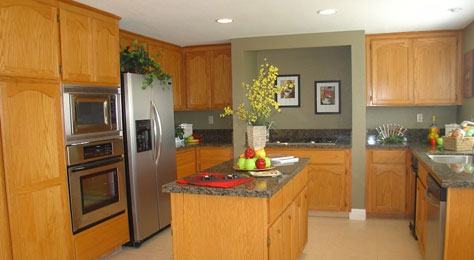
The Ultimate Easy Guide To Prepare Your Home For Sale

The Ultimate Easy Guide To Prepare Your Home For Sale If you have made the decision to sell your home and lets face it there are lot of people in that very More »

Keep Your Residence Safe From Electrical Threats

Keep Your Home Safe From Electric Threats Your residence is a risk-free place from the globe, a location to kick back as well as loosen up with household as well as close More »

How to Install Crown Molding on Angled Ceilings Installing crown molding is a classic method to add elegance and architectural detail to any room

However, when you encounter an angled or sloped ceiling—common in attics, vaulted great rooms, or Cape Cod-style homes—the project becomes significantly more complex. Unlike standard 90-degree corners, angled ceilings require precise compound cuts and careful planning. This guide will walk you through the professional techniques to install crown molding on angled ceilings successfully.

Understanding the Challenge:

The Compound Angle

The primary difficulty with sloped ceilings is that the molding must meet both the angled ceiling plane and the vertical wall plane simultaneously. This creates a compound miter cut, meaning you must adjust both the miter angle (side-to-side) and the bevel angle (tilt of the saw blade). The standard 45-degree miter used for flat ceilings will not work.

Key Term: The angle where the wall meets the sloped ceiling is called the spring angle. For this project, you must first determine this critical measurement.

Tools and Materials You Will Need

* Crown Molding of your choice (consider flexible molding for slight irregularities)
* Miter Saw (a compound miter saw is essential)
* Angle Finder or Digital Protractor
* Pencil and Tape Measure
* Coping Saw (for inside corners if needed)
* Construction Adhesive & Caulk
* Finishing Nails (2-3 inch) and Nail Gun or Hammer
* Wood Filler & Sandpaper
* Safety Glasses and Hearing Protection

Step-by-Step Installation Guide

Step 1:

Measure the Spring Angle
This is the most crucial step. Place the angle finder in the corner where the sloped ceiling meets the wall. Record this angle. For example, if your ceiling slopes at 30 degrees from horizontal, your spring angle will be 120 degrees (90 + 30). Most crown molding is designed for a 90-degree spring angle (flat ceiling), so you will be adapting it to fit your specific angle.

Step 2:

Calculate Your Saw Settings
You will need to translate the spring angle into settings for your compound miter saw. The formulas are:
* Miter Setting = arctan(sin(Spring Angle) / tan(Ceiling Slope Angle))
* Bevel Setting = arcsin(cos(Spring Angle) * cos(Ceiling Slope Angle))

Pro Tip: Use an online “crown molding angle calculator” or a dedicated smartphone app. Input your wall angle (usually 90°) and your ceiling slope angle, and it will give you the exact miter and bevel settings for your saw. Always make test cuts on scrap pieces first.

Step 3:

Cut the First Piece
Start with a full-length piece at the lowest point of the ceiling. Set your miter saw to the calculated angles. Remember that crown molding is cut “upside down and backwards” in the saw’s fence and base, just like for flat ceilings. Cut the end that will butt into the corner. Ensure the piece is properly aligned by marking which edge contacts the wall and which contacts the ceiling.

Step 4:

Fit and Install
Place the cut piece into position. It should fit snugly against both the wall and the sloped ceiling. Secure it using finishing nails driven into wall studs and ceiling joists. Use construction adhesive for additional holding power, especially if nailing into drywall alone is necessary.

Step 5:

Cut the Connecting Piece
For the next piece that joins the first, you must cut the complementary compound angle. This often involves flipping the direction of both the miter and bevel on your saw. Again, use your calculated settings or app recommendation for the “opposite” cut. Dry-fit this piece before nailing to ensure a tight joint.

Step 6:

Handle Inside and Outside Corners
* Inside Corners on a Slope: The most reliable method is to cope the joint. Install the first piece square-cut and butted into the corner. Then, cut the second piece with a simple miter that follows the slope profile. Use a coping saw to back-cut along the profiled edge, removing the material behind the decorative face. This allows it to lock over the contour of the first piece for a perfect fit.
* Outside Corners on a Slope: These require precise compound miter cuts on both joining pieces. The angles will be complementary. Extreme patience and test cuts are mandatory.

Step 7:

Finishing
Fill all nail holes and any small gaps at seams with a paintable, flexible wood filler or caulk. For larger gaps at the ceiling or wall due to irregularities, use a flexible, paintable latex caulk. Sand smooth once filler is dry, then prime and paint the molding to match your décor.

Professional Tips for Success

  • 1. Practice on Scrap::
  • Never make your first cut on your expensive molding. Buy an extra length to use for testing your angle calculations.

  • 2. Use a Jig::
  • Consider building a simple jig that holds your crown molding at the exact spring angle against your saw’s fence. This mimics its installed position and makes setting angles more intuitive.

  • 3. Embrace Decorative Blocks::
  • If complex compound angles become overwhelming, install decorative plinth blocks or rosettes at corners. You can then butt your crown molding into these blocks with simpler straight cuts, creating an intentional classic look.

  • 4. Caulk is Your Friend::
  • Even with perfect cuts, old houses have irregularities. A fine bead of paintable caulk can hide minor imperfections for a seamless finish.

    Conclusion
    Installing crown molding on an angled ceiling is an advanced carpentry project that demands precision and patience. By accurately measuring your spring angle, correctly calculating your compound miter cuts, and employing techniques like coping, you can achieve a beautiful, professional-looking result. The transformed space, with its crisp, elegant lines framing your unique architecture, will be well worth the meticulous effort. Take your time, double-check your measurements, and don’t hesitate to seek out specialized tools or calculators—they are the keys to mastering this challenging but rewarding task.

    Pool Table Leveling After Assembly: A Comprehensive Guide A perfectly level playing surface is the single most important factor in ensuring a fair and enjoyable game of pool

    While modern pool tables are engineered for precision, even the slightest deviation from level can dramatically affect ball roll, shot accuracy, and the overall integrity of the game. Leveling your table after assembly is not a suggested step—it is an absolute necessity. This guide will walk you through the professional process of achieving a tournament-ready playing surface.

    Why Leveling is Non-Negotiable

    Before beginning, understand the stakes of an unlevel table:
    * Ball Roll-Off: The most obvious symptom. Balls will consistently drift toward the low end of the table, making any strategic play impossible.
    * Inconsistent Play: Shots that should be straight will curve, speed control becomes erratic, and bank shots are rendered unreliable.
    * Damage to the Table: Over time, an uneven surface can cause undue stress on the frame, seams, and slate, potentially leading to permanent damage.

    Tools You Will Need

    Gather these tools before you start:

  • 1. A High-Quality Machinist’s Level::
  • This is your most critical tool. A standard carpenter’s level is not precise enough. Your level should be at least 24 inches long and sensitive to at least 0.0005″ per foot.

  • 2. Shims::
  • Professional-grade plastic or metal shims. Avoid wood, as it can compress over time.

  • 3. Wrenches::
  • Typically an adjustable wrench or specific socket set that fits your table’s leg levelers or frame bolts.

  • 4. Assistant::
  • Leveling is a two-person job. You’ll need help to place the slate, adjust legs, and check measurements.

    Step-by-Step Leveling Procedure

    Phase 1: Foundation and Frame

  • 1. Prepare the Location::
  • Assemble your table in its permanent location. The floor itself must be as level and solid as possible. Use your level on the floor to identify any major irregularities. A table on a sloping floor is fighting a losing battle.

  • 2. Level the Frame (if applicable)::
  • Before the slate is installed, place your level across the table’s wooden frame or cabinet in multiple directions. Use shims under the legs or base to get the frame as level as possible. This provides a stable foundation for the heavy slate.

    Phase 2: Slate Leveling (The Core Process)

    This is the meticulous heart of the operation. Most quality tables use a three-piece slate bed.

  • 1. Position the Center Slate::
  • After the frame is prepared, carefully place the center slate section. Do not tighten it down fully yet.

  • 2. Establish Your Reference Point::
  • Place your machinist’s level in the center of the slate, both lengthwise and widthwise. Identify which corner or side is the highest. This high point becomes your reference; you will not lower it, but instead raise everything else to meet it.

  • 3. Check Diagonals::
  • Place the level on the diagonal from one corner to the opposite corner. Note the bubble position. Repeat for the other diagonal. This helps identify twist or “wind” in the slate.
    4. Begin Shim Adjustment:
    * Access the adjustment points, which are typically bolts or leveling screws located at the slate edges or on mounting brackets underneath.
    * To raise a low area, you insert shims between the slate and the frame (or turn a threaded leg leveler clockwise). Work in tiny increments. Even a shim the thickness of a business card can make a significant difference.
    * Constantly re-check your level in all directions—lengthwise, widthwise, and diagonally—after every single adjustment. The process is iterative and requires patience.

  • 5. Join and Level the End Slates::
  • Once the center slate is perfectly level, bring the two end slate sections into position. Align the seams perfectly. The goal is to make all three pieces act as one perfectly flat plane.
    * Level each end section individually to the center section.
    * Pay extreme attention to the seams. There should be no “lip” or height difference where the slates meet. You can check this by placing the level directly over a seam. A slight gap underneath the seam is acceptable and will be filled with wax; a height difference is not.

  • 6. Final Check and Lock Down::
  • Perform a comprehensive “grid” check. Imagine a tic-tac-toe board on the slate. Place your level in all nine segments, both directions. The bubble should read identically in every position. Only when this is achieved should you fully tighten all slate bolts to their specified torque, being careful not to shift the slate as you do so.

    Phase 3: Final Verification and Cloth Installation

  • 1. Re-Check After Tightening::
  • The act of tightening bolts can sometimes pull the slate out of level. Do one final complete grid check after everything is secured.

  • 2. Seam Filling (for Traditional Tables)::
  • The seams between slate pieces are filled with a beeswax or proprietary compound, which is melted and smoothed flush with the surface. This is a skilled step; if unsure, consult a professional.

  • 3. Install the Cloth::
  • Once the slate bed is confirmed level and the seams are flush, the felt can be installed. A level slate ensures the cloth will be stretched evenly, completing your perfect playing surface.

    Professional Tip:

    The “Roll Test”
    After the felt is installed, a classic test is to slowly and gently roll a cue ball from one end of the table to the other, along various paths (rails, center, diagonals). Watch and listen closely. It should roll smoothly in a straight line without any deviation or change in speed. Any curve or hesitation indicates a remaining low spot.

    When to Call a Professional
    If this process seems daunting, or if your table lacks accessible adjustment points, hire a certified table mechanic. They possess the specialized tools, experience, and expertise to level a table efficiently and to exacting standards. Considering the investment a pool table represents, professional leveling is often money well spent.

    Conclusion
    Leveling your pool table is a detailed, patient task that forms the bedrock of your gaming experience. Rushing this process undermines the quality of the table itself. By methodically using the right tools and following these steps, you can transform your assembled table into a true centerpiece for competition and enjoyment, where every shot relies on skill—not a hidden slope.

    Support us!

    If you like this site please subscribe