
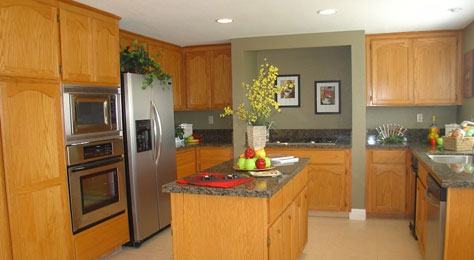
The Ultimate Easy Guide To Prepare Your Home For Sale

The Ultimate Easy Guide To Prepare Your Home For Sale If you have made the decision to sell your home and lets face it there are lot of people in that very More »

Keep Your Residence Safe From Electrical Threats

Keep Your Home Safe From Electric Threats Your residence is a risk-free place from the globe, a location to kick back as well as loosen up with household as well as close More »

Pool Table Leveling After Assembly: A Comprehensive Guide A perfectly level playing surface is the single most important factor in ensuring a fair and enjoyable game of pool

While modern pool tables are engineered for precision, even the slightest deviation from level can dramatically affect ball roll, shot accuracy, and the overall integrity of the game. Leveling your table after assembly is not a suggested step—it is an absolute necessity. This guide will walk you through the professional process of achieving a tournament-ready playing surface.

Why Leveling is Non-Negotiable

Before beginning, understand the stakes of an unlevel table:
* Ball Roll-Off: The most obvious symptom. Balls will consistently drift toward the low end of the table, making any strategic play impossible.
* Inconsistent Play: Shots that should be straight will curve, speed control becomes erratic, and bank shots are rendered unreliable.
* Damage to the Table: Over time, an uneven surface can cause undue stress on the frame, seams, and slate, potentially leading to permanent damage.

Tools You Will Need

Gather these tools before you start:

  • 1. A High-Quality Machinist’s Level::
  • This is your most critical tool. A standard carpenter’s level is not precise enough. Your level should be at least 24 inches long and sensitive to at least 0.0005″ per foot.

  • 2. Shims::
  • Professional-grade plastic or metal shims. Avoid wood, as it can compress over time.

  • 3. Wrenches::
  • Typically an adjustable wrench or specific socket set that fits your table’s leg levelers or frame bolts.

  • 4. Assistant::
  • Leveling is a two-person job. You’ll need help to place the slate, adjust legs, and check measurements.

    Step-by-Step Leveling Procedure

    Phase 1: Foundation and Frame

  • 1. Prepare the Location::
  • Assemble your table in its permanent location. The floor itself must be as level and solid as possible. Use your level on the floor to identify any major irregularities. A table on a sloping floor is fighting a losing battle.

  • 2. Level the Frame (if applicable)::
  • Before the slate is installed, place your level across the table’s wooden frame or cabinet in multiple directions. Use shims under the legs or base to get the frame as level as possible. This provides a stable foundation for the heavy slate.

    Phase 2: Slate Leveling (The Core Process)

    This is the meticulous heart of the operation. Most quality tables use a three-piece slate bed.

  • 1. Position the Center Slate::
  • After the frame is prepared, carefully place the center slate section. Do not tighten it down fully yet.

  • 2. Establish Your Reference Point::
  • Place your machinist’s level in the center of the slate, both lengthwise and widthwise. Identify which corner or side is the highest. This high point becomes your reference; you will not lower it, but instead raise everything else to meet it.

  • 3. Check Diagonals::
  • Place the level on the diagonal from one corner to the opposite corner. Note the bubble position. Repeat for the other diagonal. This helps identify twist or “wind” in the slate.
    4. Begin Shim Adjustment:
    * Access the adjustment points, which are typically bolts or leveling screws located at the slate edges or on mounting brackets underneath.
    * To raise a low area, you insert shims between the slate and the frame (or turn a threaded leg leveler clockwise). Work in tiny increments. Even a shim the thickness of a business card can make a significant difference.
    * Constantly re-check your level in all directions—lengthwise, widthwise, and diagonally—after every single adjustment. The process is iterative and requires patience.

  • 5. Join and Level the End Slates::
  • Once the center slate is perfectly level, bring the two end slate sections into position. Align the seams perfectly. The goal is to make all three pieces act as one perfectly flat plane.
    * Level each end section individually to the center section.
    * Pay extreme attention to the seams. There should be no “lip” or height difference where the slates meet. You can check this by placing the level directly over a seam. A slight gap underneath the seam is acceptable and will be filled with wax; a height difference is not.

  • 6. Final Check and Lock Down::
  • Perform a comprehensive “grid” check. Imagine a tic-tac-toe board on the slate. Place your level in all nine segments, both directions. The bubble should read identically in every position. Only when this is achieved should you fully tighten all slate bolts to their specified torque, being careful not to shift the slate as you do so.

    Phase 3: Final Verification and Cloth Installation

  • 1. Re-Check After Tightening::
  • The act of tightening bolts can sometimes pull the slate out of level. Do one final complete grid check after everything is secured.

  • 2. Seam Filling (for Traditional Tables)::
  • The seams between slate pieces are filled with a beeswax or proprietary compound, which is melted and smoothed flush with the surface. This is a skilled step; if unsure, consult a professional.

  • 3. Install the Cloth::
  • Once the slate bed is confirmed level and the seams are flush, the felt can be installed. A level slate ensures the cloth will be stretched evenly, completing your perfect playing surface.

    Professional Tip:

    The “Roll Test”
    After the felt is installed, a classic test is to slowly and gently roll a cue ball from one end of the table to the other, along various paths (rails, center, diagonals). Watch and listen closely. It should roll smoothly in a straight line without any deviation or change in speed. Any curve or hesitation indicates a remaining low spot.

    When to Call a Professional
    If this process seems daunting, or if your table lacks accessible adjustment points, hire a certified table mechanic. They possess the specialized tools, experience, and expertise to level a table efficiently and to exacting standards. Considering the investment a pool table represents, professional leveling is often money well spent.

    Conclusion
    Leveling your pool table is a detailed, patient task that forms the bedrock of your gaming experience. Rushing this process undermines the quality of the table itself. By methodically using the right tools and following these steps, you can transform your assembled table into a true centerpiece for competition and enjoyment, where every shot relies on skill—not a hidden slope.

    Professional Oven Cleaning Services Near Me: Why You Should Hire Experts A clean oven is essential for both the efficiency of your appliance and the quality of your cooking

    Over time, ovens accumulate baked-on grease, carbon deposits, and food residues that can affect performance, create unpleasant odors, and even become a fire hazard. While DIY cleaning is an option, professional oven cleaning services offer a level of thoroughness, safety, and convenience that is hard to match. If you’re searching for “professional oven cleaning services near me,” here’s what you need to know.

    The Benefits of Professional Oven Cleaning

    1. Deep Cleaning and Restoration
    Professional cleaners use commercial-grade, often eco-friendly, cleaning solutions and specialized tools to tackle stubborn grime that household products can’t break down. They disassemble parts like racks, trays, and interior panels to clean every nook, including the oven door glass, heating elements, and fan. The result is a deep clean that restores your oven to near-new condition.

    2. Time and Effort Saved
    Cleaning an oven thoroughly is a time-consuming and labor-intensive task. By hiring professionals, you reclaim your weekend and avoid the strenuous scrubbing, harsh chemicals, and messy cleanup. Most services can complete a full clean in 1-2 hours, with you doing nothing but letting them in.

    3. Safety and Appliance Longevity
    Accumulated grease is a fire risk. Professionals ensure all flammable residues are removed. Furthermore, a clean oven heats more evenly and efficiently, reducing energy consumption and preventing undue strain on its components. Regular professional cleaning can extend the lifespan of your appliance.

    4. Health and Hygiene
    Burnt food particles and grease can release unpleasant odors and potentially harmful fumes when heated. A professionally cleaned oven eliminates these sources, ensuring a healthier cooking environment and better-tasting food.

    What to Expect from a Professional Service

    When you book a local professional oven cleaning service, a typical appointment includes:
    * Inspection: Assessing the oven’s condition and type (standard, convection, self-cleaning, range, etc.).
    * Preparation: Protecting your kitchen surfaces and flooring.
    * Deep Cleaning: Applying professional solutions, degreasing, and using steam or scrapers for baked-on carbon.
    * Detail Cleaning: Cleaning all removable parts separately and wiping down the exterior.
    * Final Check: Reassembling the oven and ensuring it’s spotless and functional.

    Many companies also offer additional services like hob/extractor hood cleaning or full kitchen deep cleans.

    How to Find Reliable “Oven Cleaning Services Near Me”

    1. Search and Reviews
    Use search engines and local business directories with your location (e.g., “professional oven cleaning in [Your City]”). Pay close attention to reviews on Google, Yelp, or Facebook. Look for consistently high ratings and positive comments about reliability, thoroughness, and professionalism.

    2. Check Credentials
    Ensure the company is insured. This protects you and your property in the rare event of accidental damage. Membership in a trade association can also indicate a commitment to industry standards.

    3. Get Quotes and Ask Questions
    Contact 2-3 local services for a quote. Most offer pricing based on the oven type (single, double, range) rather than hourly rates. Be wary of prices that seem too good to be true. Ask questions:
    * What cleaning products do you use?
    * Do you offer a satisfaction guarantee?
    * How long will the service take?
    * Is the price all-inclusive?

    4. Verify Eco-Friendly Practices
    If this is important to you, ask if they use non-toxic, biodegradable cleaning agents. Many professional services now prioritize effective, environmentally friendly solutions.

    Conclusion

    Investing in a professional oven cleaning service is an investment in your home’s safety, your appliance’s efficiency, and your own peace of mind. The convenience, exceptional results, and expert care provided by local professionals far outweigh the cost and hassle of attempting a deep clean yourself.

    Ready to enjoy a sparkling, efficient oven? Start your search for trusted “professional oven cleaning services near me” today, and experience the difference expertise makes.

    Support us!

    If you like this site please subscribe